
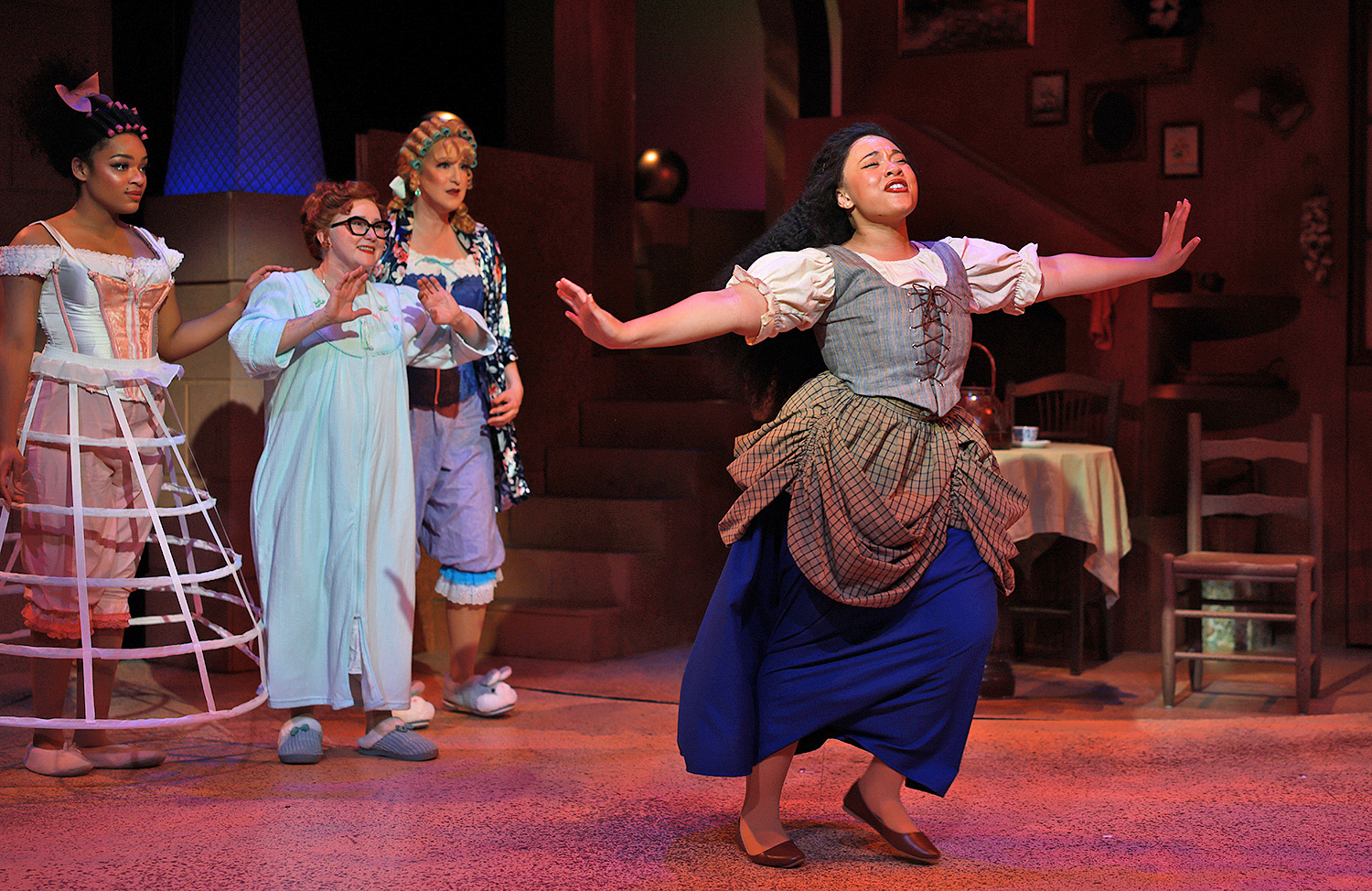
Cinderella – Courtesy of Beef & Boards Dinner Theatre. Used with permission.
Cinderella – Courtesy of Beef & Boards Dinner Theatre. Used with permission.
Beef & Boards Dinner Theatre is presenting Rodgers & Hammerstein’s beloved musical Cinderella, with a book by Douglas Carter Beane and a score by Richard Rodgers and Oscar Hammerstein II. I saw the production on Saturday.



The plot of Cinderella is familiar: a young woman is mistreated by her stepmother and stepsisters, dreams of a better life, receives magical help, attends the ball, and leaves behind the glass slipper. What makes this version especially appealing is the way it reveals Cinderella’s inner life and makes her more than a fairy-tale symbol. She is gentle and resilient, but also thoughtful, hopeful, and self-possessed. That gives the musical added emotional weight and makes the story feel genuinely heartfelt.
The musical’s history is part of its lasting appeal. Rodgers and Hammerstein wrote Cinderella for television in 1957, and that production introduced the score to a wide audience. Later television versions kept the story alive for new generations, helping explain why the show still feels so familiar. That history also helps explain why Cinderella can seem both old-fashioned and timeless: it comes from the golden age of musical theater, but its themes of kindness, hope, and transformation still resonate.
Cinderella – Courtesy of Beef & Boards Dinner Theatre. Used with permission.
The score is one of the musical’s greatest strengths and, for me, the clearest expression of its heart. Rodgers and Hammerstein’s music is polished, warm, and memorable, with songs that deepen character as much as they create mood. In My Own Little Corner stands out for revealing Cinderella’s imagination and longing, while Impossible and It’s Possible bring charm and magic. Ten Minutes Ago adds a touch of classic romance. Overall, the score is refined rather than showy, and its beauty lingers long after the performance ends.
The production, deftly directed by Elizabeth Stark Payne, was further strengthened by a strong cast led by Grace Ellis Solomon in the title role and Carmine Mastrokostas as the Prince. The two shared convincing chemistry, and both delivered exceptional vocals and acting that made their sweet, love-struck characters fully believable.
Chanel Edwards Fredrick also brought strong acting and vocal skill to the role of the Fairy Godmother, while Amanda Butterbaugh added welcome comic flair in a supporting turn.
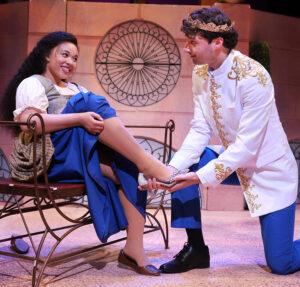
Cinderella – Courtesy of Beef & Boards Dinner Theatre. Used with permission.
I found the minimal set uninspired and ordinary. The costumes, especially the contemporary style ones used for the grand ball, also fell short, lacking the glamour, elegance, and color palette the scene required. The colors and fabrics felt mismatched to the moment and became a distraction.
Overall, this was a sincere and musically satisfying production whose strongest qualities outweighed its visual shortcomings. I especially appreciated the diversity of the cast, which included actors of color, and Beef & Boards deserves credit for its commitment to inclusive casting. That effort to reflect the broader community onstage added another layer of warmth to a production already rich in heart, charm, and musical appeal.
For tickets to Cinderella which runs through June 12, visit beefandboards.com