
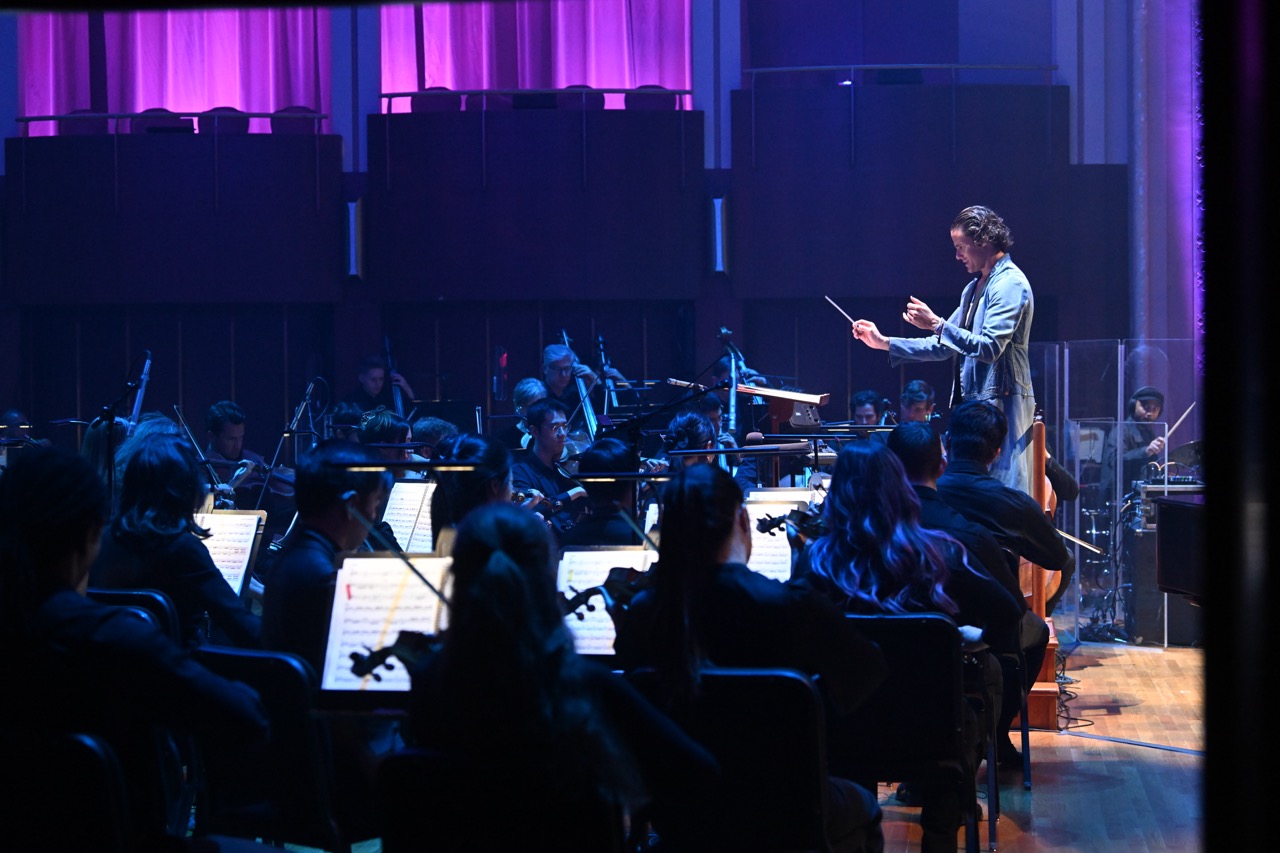
Taylor Swift: The Symphony Era – Courtesy of Tom Russo. Used with permission.
Steve Hackman, one of today’s most innovative crossover musicians, walked onstage and skipped the playlist. Instead of presenting a stop-and-start run of hits, the conductor-composer led the Indianapolis Symphony Orchestra through Taylor Swift: The Symphony Era, performed straight through except for a brief intermission in a two-hour program Wednesday at Hilbert Circle Theatre. Hackman didn’t simply cover Swift. He reshaped her songs for orchestra, weaving about 42 of them into a single score that connected hits and deeper cuts. The orchestra played melodies the audience knew, but in a form designed to unfold as one live experience. For two hours, the concert felt less like a tribute than a fresh way of hearing familiar music.
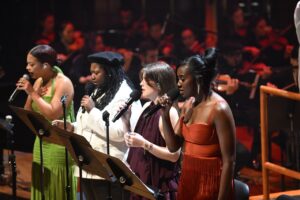
Taylor Swift: The Symphony Era – Courtesy of Tom Russo. Used with permission.


What sustains Swift’s appeal, and helps explain why the full house appeared to include many women and girls across generations, is not just scale but precision. Many of the youngest attendees and the adults with them arrived in sequins and chiffon, underscoring how fully Swift’s music has become not just a listening experience but a shared ritual. The audience’s energy showed how powerfully that connection carries into live performance.
The answer lies in the songs themselves. Swift has a gift for turning private feeling into vivid scenes, writing about friendship, heartbreak, ambition, resentment and reinvention in ways that feel specific yet widely recognizable. Listeners do not just admire the songs; they see their own lives in them. Over time, she has also built a culture around that connection, making the experience of listening feel shared as well as personal.
Hackman’s orchestral vision featured vocalists India Carney, Zoe D’Andrea, Kayla GC and Jessica Taylor, along with the band members who appear with him in this production: Nick Clark on bass, TaRon Lockett on drums, Ahmed Alom on piano and synthesizer, and Max Townsley on guitar and synthesizer.
The singers did more than carry the melodies. They captured Swift’s essence without slipping into imitation, finding ways to interpret the songs that felt true to her style while still making them their own. They could be intimate when the music called for it and powerful when it opened up, and they met the material with the vocal strength and range it demands. The band was just as strong. Clark and Lockett kept the music moving, Alom added color and atmosphere on piano and synthesizer, and Townsley gave the arrangements edge and sparkle. Together, the musicians gave Hackman’s score the flexibility it needed to move easily between pop concert energy and orchestral scale.
Hackman, who has an easy manner onstage, introduced the songs as they were grouped into “scenes,” pointing to Swift’s recurring themes of dreaming, heartbreak, resilience and love. Rather than mix Swift’s songs with excerpts from classical composers, he built original transitions that let one melody open naturally into the next, sometimes by stretching a harmony, sometimes by letting a rhythm gather underneath it. The result was music that felt carefully shaped at every turn, with phrases unfolding in lines that sounded fluid, expansive and strikingly beautiful.
Just as impressive was how fully the Indianapolis Symphony Orchestra settled into Hackman’s approach. The strings could sound rich one moment and sharply rhythmic the next, the brass brought force without becoming blunt, and the winds added color that made familiar melodies feel new again. Even in the busiest passages, the balance held, and the shifts between orchestra, band and singers stayed clear. That control helped keep the performance moving through its many changes in mood and style.
That range came through in songs such as “Love Story,” “Enchanted,” “Wildest Dreams,” “Bejeweled,” “You’re on Your Own, Kid,” “All Too Well,” “Cruel Summer” and “Style,” which carried the program from romance and fantasy through heartbreak and defiance to a reflective but celebratory close. Framed in two acts and eight scenes, the set let Hackman trace Swift’s emotional and musical range while maintaining the propulsion of a single symphonic event.
By the close, Taylor Swift: The Symphony Era succeeded because it honored what listeners love about Swift while opening the songs to something larger. Hackman and the Indianapolis Symphony Orchestra never lost sight of the music’s emotional directness, even as they gave it new scale and color. The audience’s anticipatory, enthusiastic energy was so palpable that it offered a glimpse of what it must be like to see Swift herself in person.