
“
Sancocho” builds on more than five years of Latino outreach at The District Theatre, which began with the original production “Gaddafi’s Cook” and now continues through its growing Latino arts initiative, Cultura Live Indy. Christin Eve Cato’s play, presented at The District Theatre, was billed as “A Culinary & Culturally Immersive Play,” and having seen the closing performance of its two-weekend run, I can say the label fits.
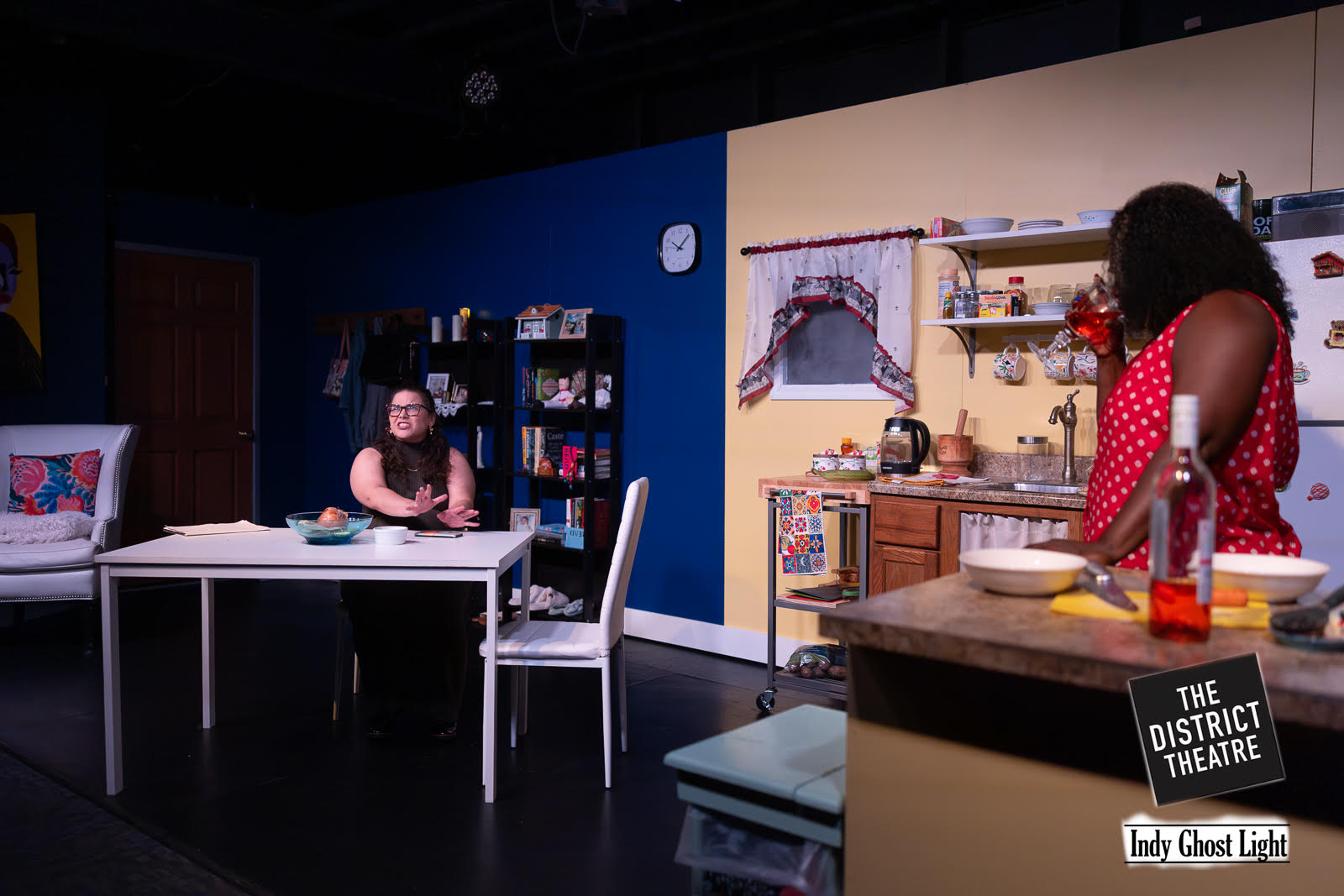
 The play unfolds in one kitchen and follows two Puerto Rican sisters as they cook. Alicia Sims plays Caridad, who is making the family sancocho, a stew handed down through her family. Her younger sister, Renata, played by Yolanda Valdivia, is a lawyer seven months pregnant who would rather talk about their father’s will. Their father is in declining health, and the sisters must face what that means.



The sisters are written as opposites. Caridad is practical, watchful and worn down by experience, and the kitchen is her territory. Renata is polished, ambitious and accustomed to getting her way. She is warm, but the stove makes her awkward, and the family’s past seems to matter less to her than what comes next. Their differences create friction, yet humor and real affection keep surfacing. Beneath the teasing is a real sibling rivalry, and the baggage the sisters carry with one another is revealed in their constant sparring, where every small argument over the stew or the will carries years of old resentment.
The sisters also remember their father very differently. Renata grew up in New York with more opportunities and recalls him warmly. Caridad remembers a harder man and has carried that for years. Long-held grievances surface, and so do family secrets. The cooking is more than a setting, and the pot of stew heats onstage, so the smell of simmering stew fills the room.
Several ideas run through the story. The first is inheritance, both the recipe and the emotional baggage that comes with it. Sibling rivalry is just as present, coloring nearly every exchange. Grief is close behind, since the sisters are preparing for a loss while still figuring out what they owe each other. Their differing memories of one man show how two people in the same family can carry away very different truths. The play also looks at cultural identity, as each sister relates differently to her Puerto Rican roots. Under it all is the possibility of healing across generations, through honest conversation, not easy forgiveness.
The dialogue carries much of this. The sisters speak plainly and loudly, tease each other, and slip between English and Spanish as feelings rise. Their emotion is open and unguarded; the kind of passion outsiders sometimes dismiss as “too dramatic.” Yet Latino families often show love and conviction through volume, speed and intensity, and listeners used to a more restrained style can mistake that for aggression. Having grown up in a bicultural family, I found this deeply relatable. The sisters are not exaggerating or attacking each  other; they are saying what they mean, and the play treats that intensity as a measure of how much they care.
The acting makes all of this believable. Sims lets the years show in Caridad’s every gesture, and cooking is how she steadies herself as her father’s death nears. Valdivia gives Renata a brisk, restless energy, so her awkwardness at the stove feels earned. She also earns praise for prepping and cooking the stew’s ingredients in real time, and the cooking itself is great stage business for both actors. Together they play the sisters’ friction without forcing it, and their fights land because we can see the affection underneath. The director, Andres Lopez, deserves credit for that balance. He keeps the focus on the two women and lets the real pot of stew do some of the storytelling. Before accepting the job, he contacted Cato directly.
The dramaturg, Taylor Harmon, brought cultural background to the staging, and her program essay reads the cooking as a kind of care work, often done by women, that quietly keeps memory alive. What remains open is whether the sisters can become allies once their father is gone.
Kudos are due to The District Theatre for giving Latino artists and stories a stage and a voice. That commitment is especially meaningful at a time of hateful rhetoric and the demonization of the Latino community. By inviting audiences into this kitchen, “Sancocho” lets them see Latino families as full, complicated and deeply human, and The District has earned applause for making that possible.