
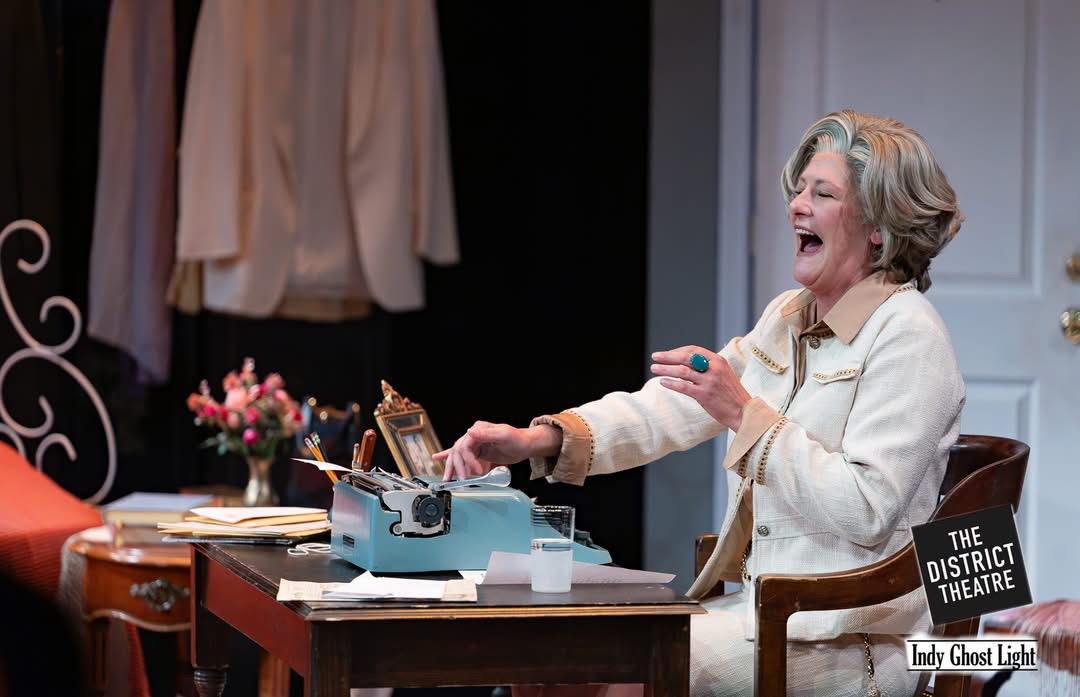
Hoosier-born journalist Janet Flanner might seem, at first glance, unlikely stage material, which is part of the pleasure of “They Call Me Genêt,” D. Paul Thomas’ 90-minute, one-woman show that premiered Thursday before a full house at The District Theatre in Indianapolis. Produced by The District Theatre under Managing Director Pauline Moffat and sponsored by Michael Schaefer and Jeffrey Brinkmann, Ann Stack and Bruce and Julie Buchanan, the production stars preeminent Indianapolis actor Jen Johansen and turns the life of the longtime The New Yorker Paris correspondent into a surprisingly agile evening of wit, memory, gossip, history and hard-won self-knowledge.
Janet Flanner (1892-1978) was an American journalist, critic and literary stylist best known as The New Yorker’s longtime Paris correspondent. She was born in Indianapolis into a prominent Quaker family with deep civic and cultural roots. Her father, Francis William “Frank” Flanner, helped found Flanner and Buchanan Mortuaries, supported Indiana’s first crematorium and was connected to charitable work that included the settlement house later known as Flanner House. Her mother, Mary Hockett Flanner, brought an artistic spirit into the home as a poet, playwright, actress and public reader. Janet was the second of three daughters, between Marie and Hildegarde, both of whom also followed creative paths.



Educated in Indianapolis public schools and later at Tudor Hall School for Girls, Flanner grew up in a household where privilege, reform-minded Quaker values and steady exposure to books, music, theater and travel all converged. A family year in Germany gave her an early glimpse of Europe, but the family’s life changed sharply after their return to Indianapolis, when her father died by suicide in 1912. After brief study at the University of Chicago and work in Philadelphia, Flanner came home and joined The Indianapolis Star, where she became one of the country’s early film critics. She later moved to New York and then Paris, cities whose artistic circles and looser social conventions made it possible for her to live more authentically as a lesbian, including in her final relationship with Natalia Danesi Murray, who is mentioned in the play; in Paris, Harold Ross hired her in 1925 to write “Letter from Paris” for The New Yorker under the byline “Genêt.” Her dispatches made her one of the clearest American voices interpreting Paris for readers back home.
What made Flanner’s work stand out was not only the astonishing range of people she covered, but the exacting eye she brought to a city in motion. She wrote about writers such as Ernest Hemingway, F. Scott Fitzgerald, Gertrude Stein, Edith Wharton, Thomas Mann, André Gide, Colette, Albert Camus and Jean-Paul Sartre; artists and performers including Pablo Picasso, Jean Cocteau, Igor Stravinsky, Maurice Ravel, Josephine Baker, Isadora Duncan and Edith Piaf; and political figures whose rise helped define the century, including Adolf Hitler and Benito Mussolini.
She was working in Paris when the city seemed to occupy the center of modern culture. After World War I, Paris drew American expatriates, European modernists, artists, musicians, dancers, publishers and political exiles. A strong dollar, looser social rules, café life and the close quarters of the Left Bank made the city feel freer and more experimental than much of the United States. In places such as Les Deux Magots, literature, painting, music, fashion and politics collided daily. That gave Flanner a rare beat. She was not merely writing about famous people. She was catching a moment when private gossip, public scandal, artistic revolution and international crisis all seemed to meet at the same table.
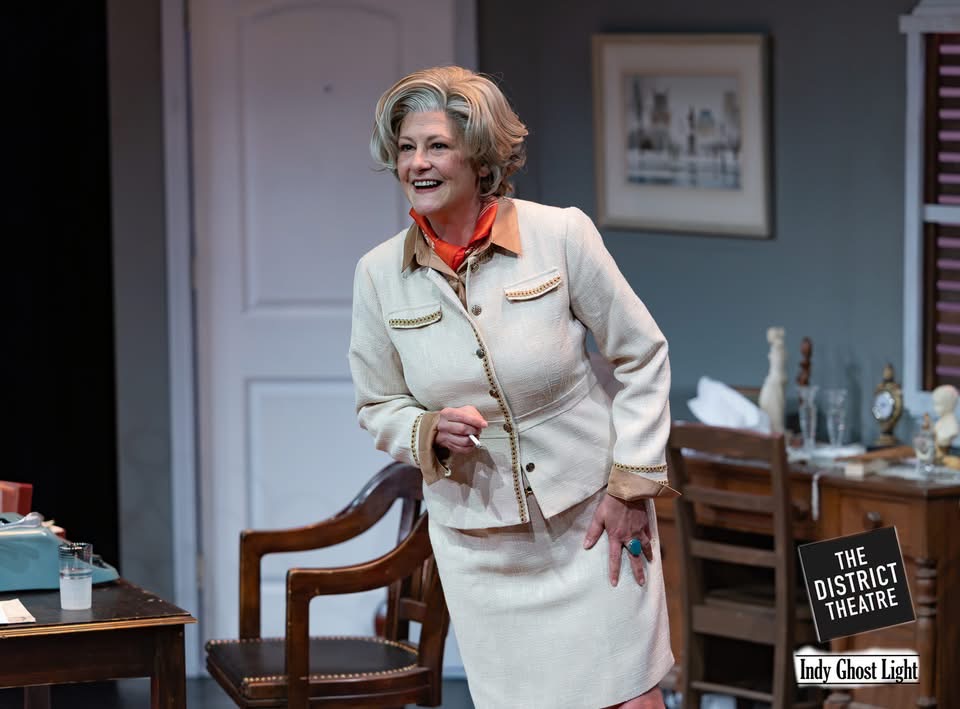
Johansen, who read for and workshopped the role with playwright Thomas eight years ago, gave Flanner a personality as sharp as her prose: observant, controlled, dryly funny and wary of ego, including her own. The performance suggested a woman who understood the theater of public life but refused to mistake it for truth. Flanner’s style depended on distance. She watched, absorbed and compressed what she saw into sentences that could turn gossip into cultural evidence and social detail into political meaning. That discipline made her formidable on the page, though the play also suggested the cost of such devotion. Work, independence and exacting standards could make intimacy difficult, and Johansen let the audience see how brilliance could shade into self-absorption.
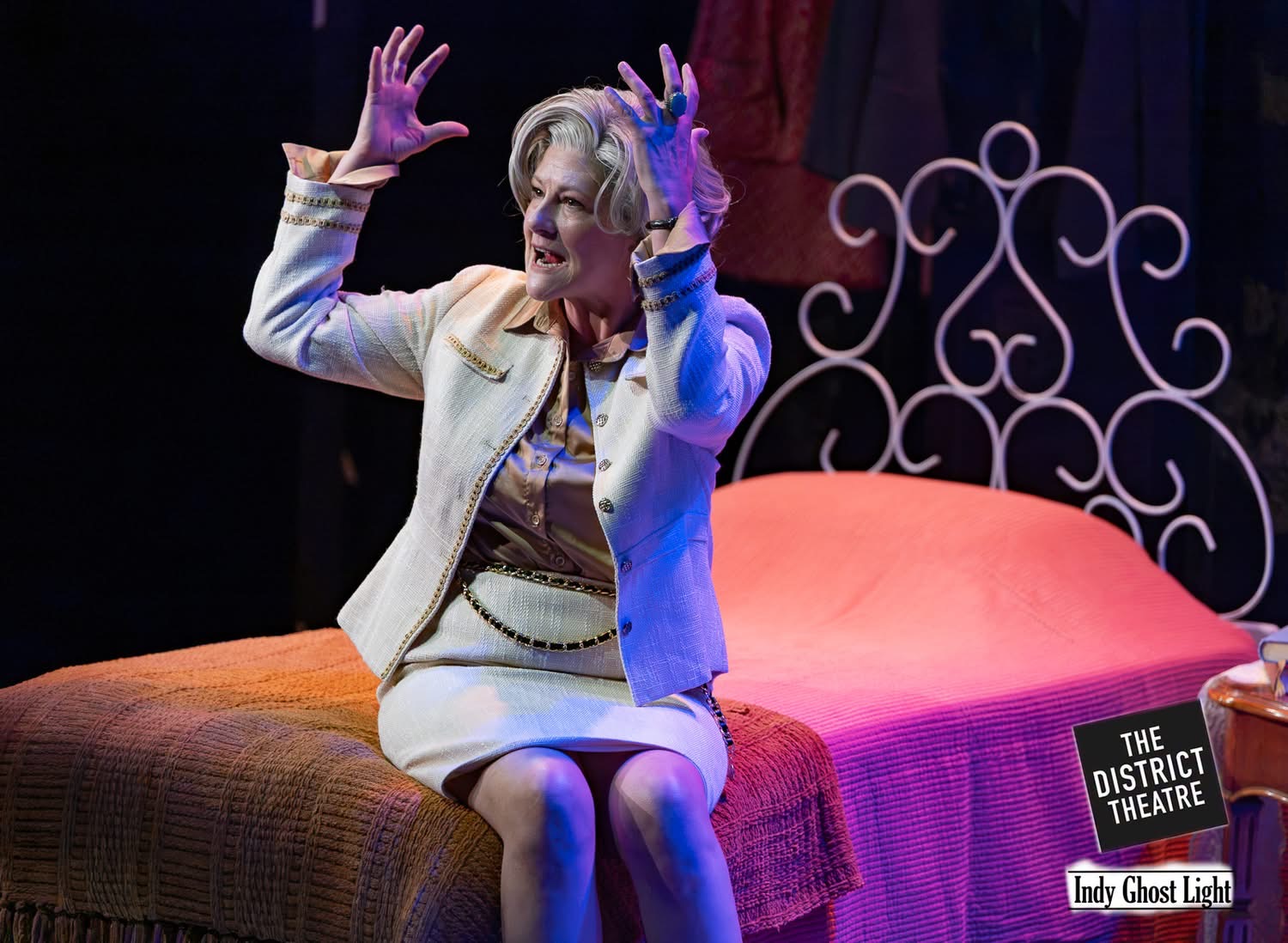
Johansen’s performance gained its power because she did more than recite an impressive amount of dialogue. She carried the piece with remarkable control, moving seamlessly through Thomas’ dense script as Flanner recalled the famous expatriates, artists, writers and political figures who filled her Paris years.
The name-dropping could easily have felt like a roll call, but Johansen turned it into lived memory, giving the anecdotes shape, wit and emotional color. She also found the quieter moments in the script, when Flanner’s armor slipped and the audience saw the flaws, insecurities and vulnerabilities behind the polished correspondent.
Director Chris Saunders, respected founder and artistic director of American Lives Theatre, was an ideal choice to guide his close friend and colleague Johansen through the production’s ambitious theatrical demands. He also made shrewd use of props and stage business to ease the transitions, giving Johansen practical anchors as the piece moved among memories, personalities and emotional registers.
Thomas’ script was strongest when it reminded the audience why Flanner still mattered. She was not simply a witness to famous people or glamorous rooms. She was one of the great American correspondents of the 20th century, a journalist who brought discipline, style and moral intelligence to the act of observation. Thomas’ storytelling does justice to Flanner’s own masterful craftsmanship by giving her life the same kind of shape, precision and accumulated force that distinguished her prose. Her writing matched the caliber of the artists, writers and statesmen she covered because she treated reporting as both craft and responsibility. By placing Flanner’s brilliance, flaws and fierce independence in full view, the play did more than revive a notable Hoosier life. It restored the stature of a writer who helped teach American readers how to see Paris, Europe and the modern age itself.
“They Call Me Genêt” deserves an audience well beyond Indianapolis. With its strong production values—Josh Morrow’s evocative set, Guy Clark’s elegant costuming for Johansen, Jan White’s props and Laura Glover’s precise lighting—the production already feels ready for the intimacy and scrutiny of an Off-Broadway house, where one hopes it will land. Its questions about ego, celebrity, political extremism, social freedom and the ways a culture measures itself remain sharply current, but its deepest value lies in the way it honors Flanner’s ingenuity and originality: her ability to transform observation into art, social detail into cultural evidence and history into prose alive with intelligence. The world Flanner observed had its glamour and its dangers, its liberation and its blindness, and the play understands it as both spectacle and warning.
For tickets and information about They Call Me Genêt,’’ running through July 26, visit thedistricttheatre.org