
Moonbug Photography. Used with permission.
“Cinderella” – Moonbug Photography. Used with permission.
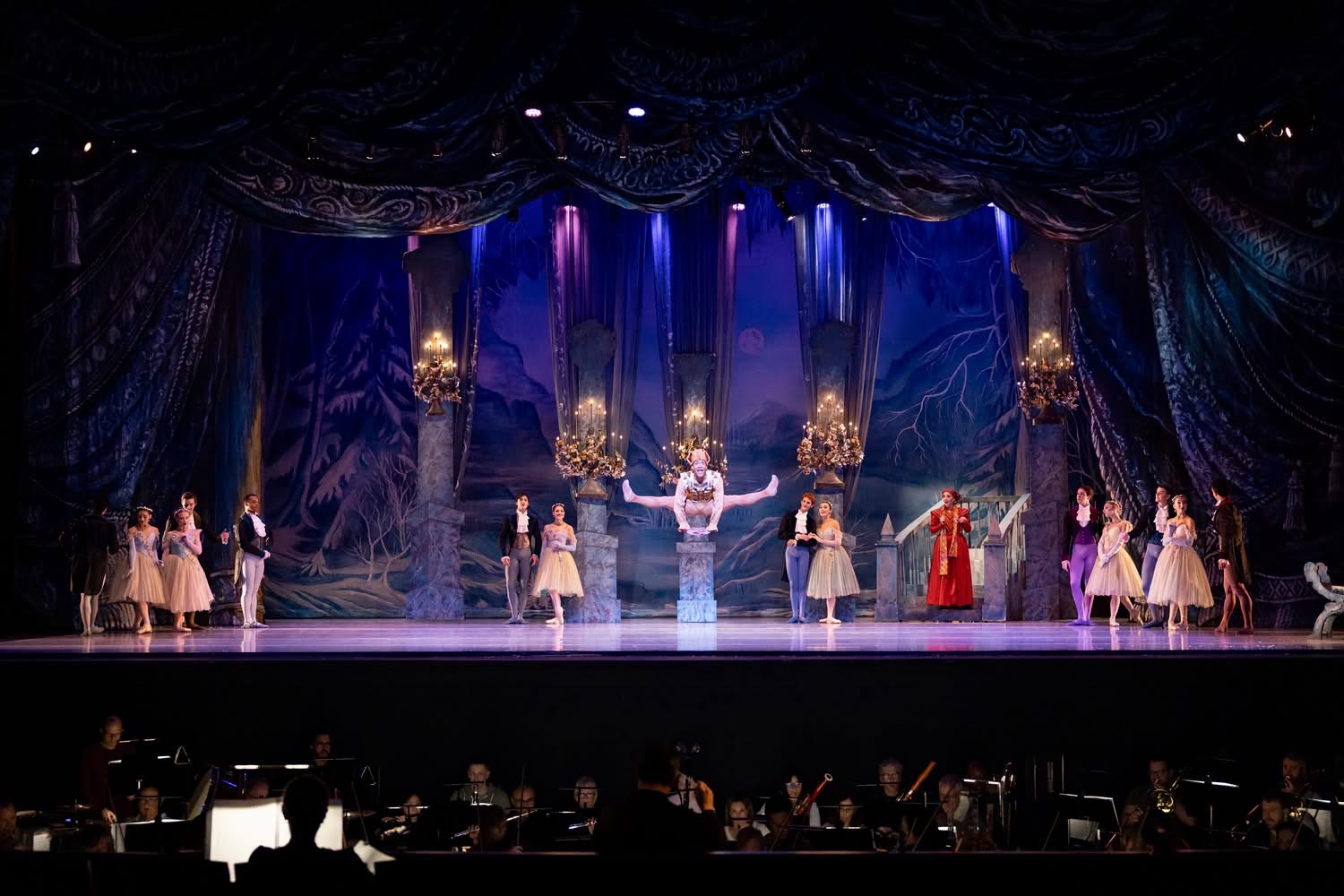
At the Saturday matinee at Clowes Memorial Hall, Indianapolis Ballet and the Indianapolis Symphony Orchestra made the ballet company’s premiere of “Cinderella” a serious artistic occasion, distinguished by warmth, precision and dramatic conviction.
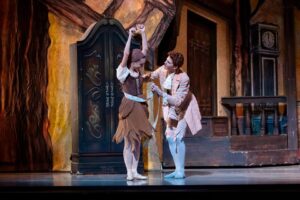
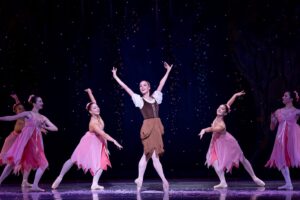
Ada Peruzzi was an ideal Cinderella, her grace inseparable from her humanity. Stooped shoulders, hurried kitchen steps and a pause in which hope surfaced revealed a young woman marked by labor and longing, not simply awaiting rescue. With the Fairy Godmother’s arrival, the movement broadened and Peruzzi acquired authority without losing her modesty. The transformation convinced because Cinderella remained recognizable beneath the finery. Peruzzi’s technique mattered, but her characterization mattered more.



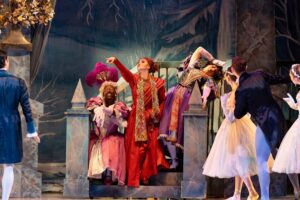
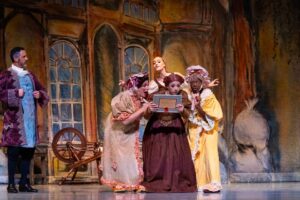
William Robinson and Sage Simons deserve particular praise as the stepsisters, executing Victoria Morgan’s broad physical comedy with exuberance and precision. Their awkward entrances, rivalry and hunger for attention made vanity visible through movement. Apparent clumsiness depended on control; their timing sharpened the contrast with Cinderella’s grace. They drew laughter from young and old without letting caricature descend into cruelty, providing a recognizably human counterweight to the tenderness.
“Cinderella” – Courtesy of Moonbug Photography. Used with permission.
Against that comedy, the ballroom pas de deux, a dance for two, revealed genuine tenderness. Trevor Pinter Parsons was an ideal counterpart to Peruzzi: his attentiveness gave her quiet authority room to unfold. He did not merely execute lifts; he attended to his partner, making their partnering expressive rather than merely impressive. As shyness yielded to affection, the dance became a conversation, not an exhibition of strength. Peruzzi’s modesty and Parsons’ attentive presence suggested two young people finding ease together. Their technique made that chemistry convincing.
The production offered four firsts in my experience of seeing any ballet version of “Cinderella”: puppet mice, the prince’s audience search, stepsisters in drag and 12 dancers carrying the clock’s numbers. The dancers made Cinderella’s midnight deadline a moving presence rather than a distant warning. Olivia Baez and Claire Wright, dressed in black, operated the charming mice. Parsons delighted spectators by trying the slipper on several women’s feet in the front rows. Along with the stepsisters’ theatrical play, these surprises gave the familiar story freshness.
Cinderella’s forgiveness was more striking still. This was the first version I had seen in which she treated her stepsisters and stepmother so generously despite their mistreatment. When they recognized her as the mysterious woman who had captivated the prince at the ball, she left their cruelty behind without returning it.
“Cinderella” – Moonbug Photography. Used with permission.
Morgan told the story clearly without a word of dialogue. Kitchen steps conveyed Cinderella’s burdens, awkward entrances exposed the stepsisters’ vanity, and attentive partnering traced the lovers’ affection. Movement did the work of speech, revealing both events and feelings.
Equally important was the humanity Morgan infused into the movement. Her caricatures retained recognizable vanity and insecurity. Cinderella’s kindness, resolve, humor and forgiveness gave her life beyond the fairy-tale outline; the Fairy Godmother’s maternal understanding made magic personal. Morgan’s classical vocabulary — sustained line, controlled turn, held balance — yielded whenever comedy or private feeling required it. Modern yet faithful to the tale’s moral center, the choreography served the story, with humor and tenderness enriching one another.
The visual presentation matched that dramatic richness. Lavish sets and costumes, designed by Peter Farmer and provided by Cincinnati Ballet, made Cinderella’s passage from kitchen drudgery to ballroom splendor visible, with production values worthy of a world-class presentation.
The orchestra was an equal partner. Under Andrew Grams, the Indianapolis Symphony Orchestra did not merely accompany the dancers; it conversed with them.
Prokofiev’s wit, irony and dramatic edge give the story emotional shape. The score makes the kitchen drab and constricted, then opens the ballroom to radiance. At midnight, it conveys the urgency of time: as Cinderella flees, the orchestra seems to flee with her. When the slipper fits, the music expresses relief rather than triumph, a feeling I shared.
“Cinderella” – Moonbug Photography. Used with permission.
Grams sustained the balance between pit and stage throughout the two acts, letting music and movement illuminate one another. He maintained tension without sacrificing lyricism: the waltzes breathed, the strings shimmered and the woodwinds offered playful commentary. The brass announced the prince without overwhelming the stage. I have heard this score in recordings, but hearing it live with dancers above the orchestra made its structure clearer. On Saturday, that difficult balance held.
By the conclusion, technique had receded from attention. What remained was the satisfaction of witnessing kindness rewarded, and gratitude that Indianapolis possesses a ballet company and orchestra capable of presenting a full-length classic together at this level.
It was a fairy-tale matinee. But its finest magic was human: the power of music and movement to make kindness matter.
For tickets and information about Indianapolis Ballet’s 2026-2027 season visit indyballet.org.