
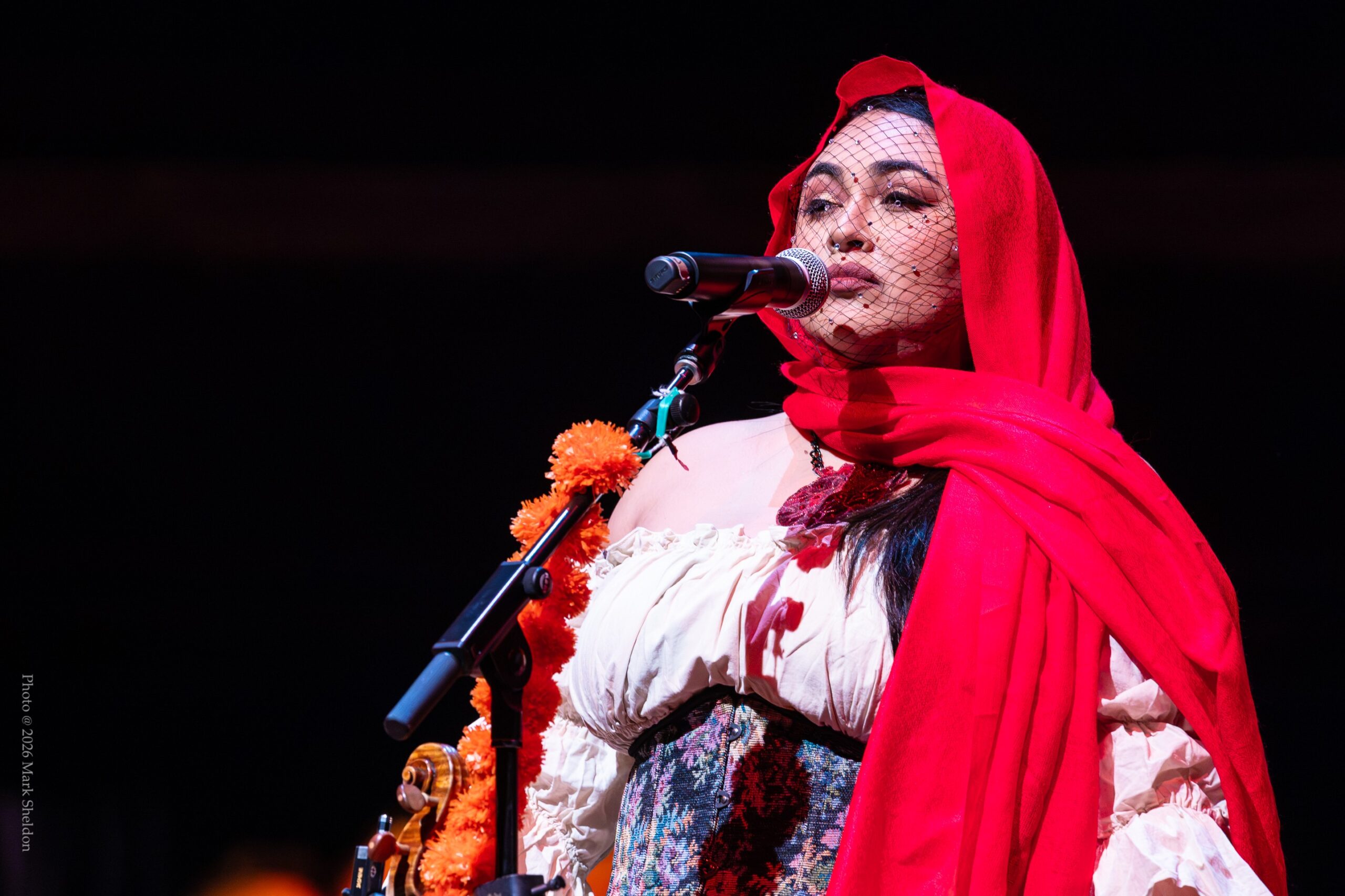
“Hasta Las Muerte”Courtesy of Mark Sheldon. Used with permission.
At the Payne & Mencias Palladium in Carmel, Indiana, on Oct. 29, 2026, “Hasta La Muerte” honored the dead while celebrating life. Las Cafeteras’ two-act production drew on Día de los Muertos through music, dance, poetry and storytelling. Its celebration of ancestral memory also carried personal meaning for this Mexican American with roots in Oaxaca.
The packed, primarily Latino audience was enthusiastic and excited, with applause and audible responses reflecting its engagement throughout. Non-Latino attendees seemed equally engaged. The bilingual show brought a distinctly Chicano political and social perspective to navigating Mexican and American cultures. The response gave the evening the feel of a community gathering as well as a performance, with the connection between stage and audience evident in what could be heard and seen around the hall.
The show’s personal inspiration came from Hector Flores’s father, who died at 54: Flores imagined his father’s journey into the afterlife. Las Cafeteras began in 2005 among son jarocho students at East Los Angeles’s Eastside Café, blending Afro-Mexican traditions with rock, reggae, hip-hop and Motown. Leaders Denise Carlos and Hector Flores brought activist roots, singing, jarana playing and percussive zapateado footwork to the show.



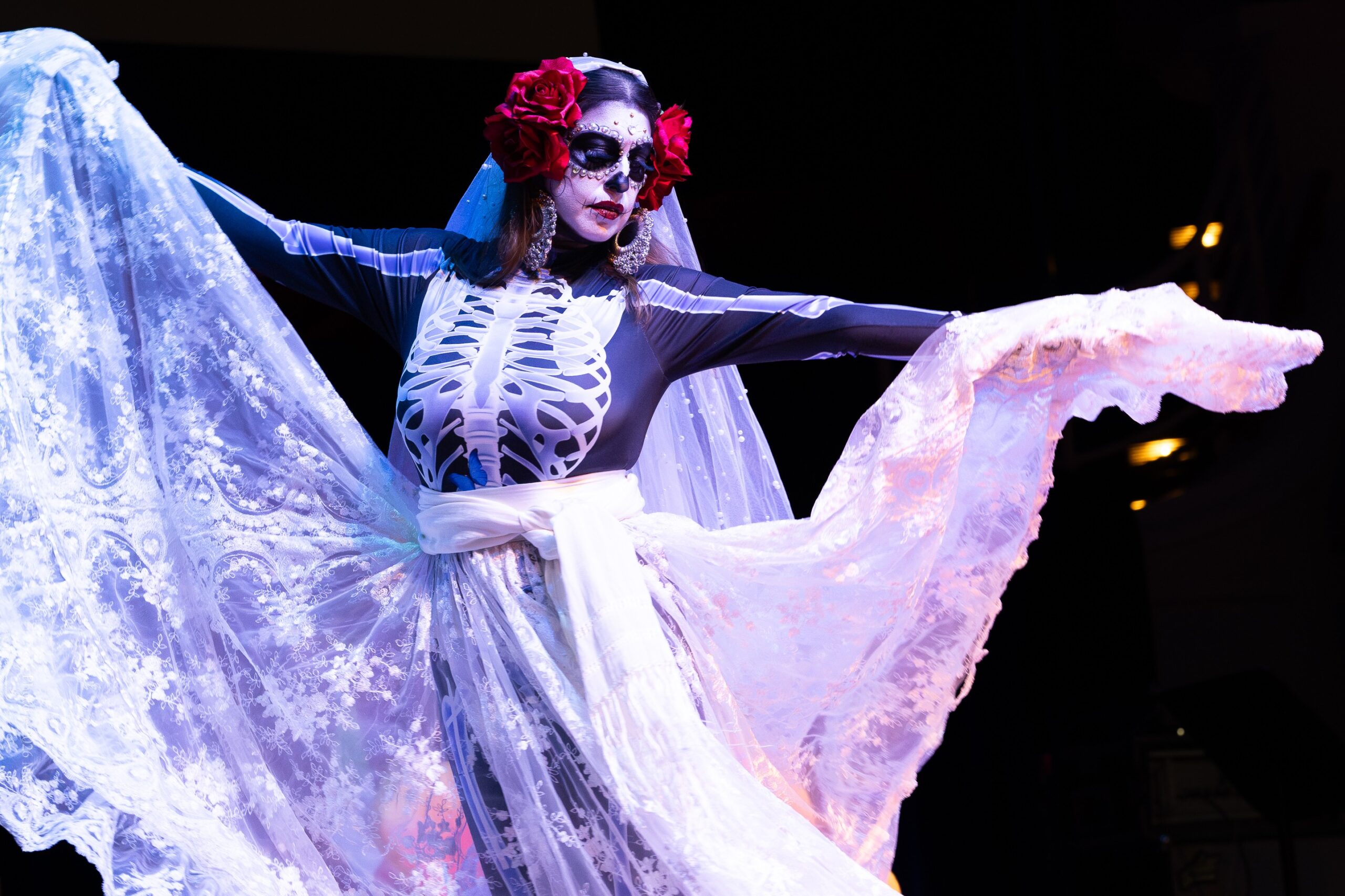
“Hasta Las Muerte” – Courtesy of Mark Sheldon. Used wth permission.
Día de los Muertos bring Indigenous traditions and Catholic observances together through food, flowers, candles and offerings that welcomed departed loved ones home. Those acts of care gave remembrance a place in life as it moved forward. The show drew on that balance: loss mattered, but so did the love and memory that survived it. Its cultural foundation helped explain why celebration and grief could share the same stage without canceling each other out.
La Catrina guided the dead and comforted those left behind. The show used folklore to question patriarchy and give curanderas, traditional women healers, a stronger voice.
The joy and richness of the Latino culture celebrated onstage came through in the lighting, costumes and sound. Together, they captured Mexico’s explosive color, flavor and energy, keeping the story of loss rooted in a celebration of life.
The performer who played La Catrina stood out as a fine dramatic actor and dancer. Even under the heavy makeup, she gave the story a compelling human presence. Hector Flores and Denise Carlos impressed with their vocals, and the cast and musicians were uniformly talented, bringing skill and energy to the production. The praise did not belong to one performer alone: the ensemble made the evening’s mix of music, movement and drama convincing. “La Llorona” and “La Bamba,” the latter dedicated to Ritchie Valens, were crowd favorites.
The migrant scene showed another side of that talent. Dancers, some in hoodies, carried flashlights as they portrayed a nighttime desert crossin. Their movement captured the desperation, while those simple details made the danger feel immediate and human. The scene was moving, powerful and chilling. Against the production’s exuberant color and energy, it brought the stakes of migration into sharp focus. These were not abstract political ideas; the dancers gave them a human form.
The evening’s shared celebration reached beyond a single background or family history. “Hasta La Muerte” made room for grief without letting it have the last word. Its scenes of danger and loss sat alongside music, movement and cultural pride, offering a reminder that honoring those who had died also meant appreciating the people still beside us. That balance gave the production its warmth and its emotional weight.
The Palladium deserves credit for presenting “Hasta La Muerte” and scheduling Ballet Folklórico de México de Amalia Hernández for Feb. 28, 2027, at 7 p.m. This programming offers recognition of Central Indiana’s growing Latino community and its contributions to business, the workforce and cultural life. Welcoming our music and traditions onto that stage offers Latino audiences a sense of belonging and invites their neighbors to share in that culture.
For tickets and information about Ballet Folklórico de México de Amalia Hernández visit thecenterpresents.org