
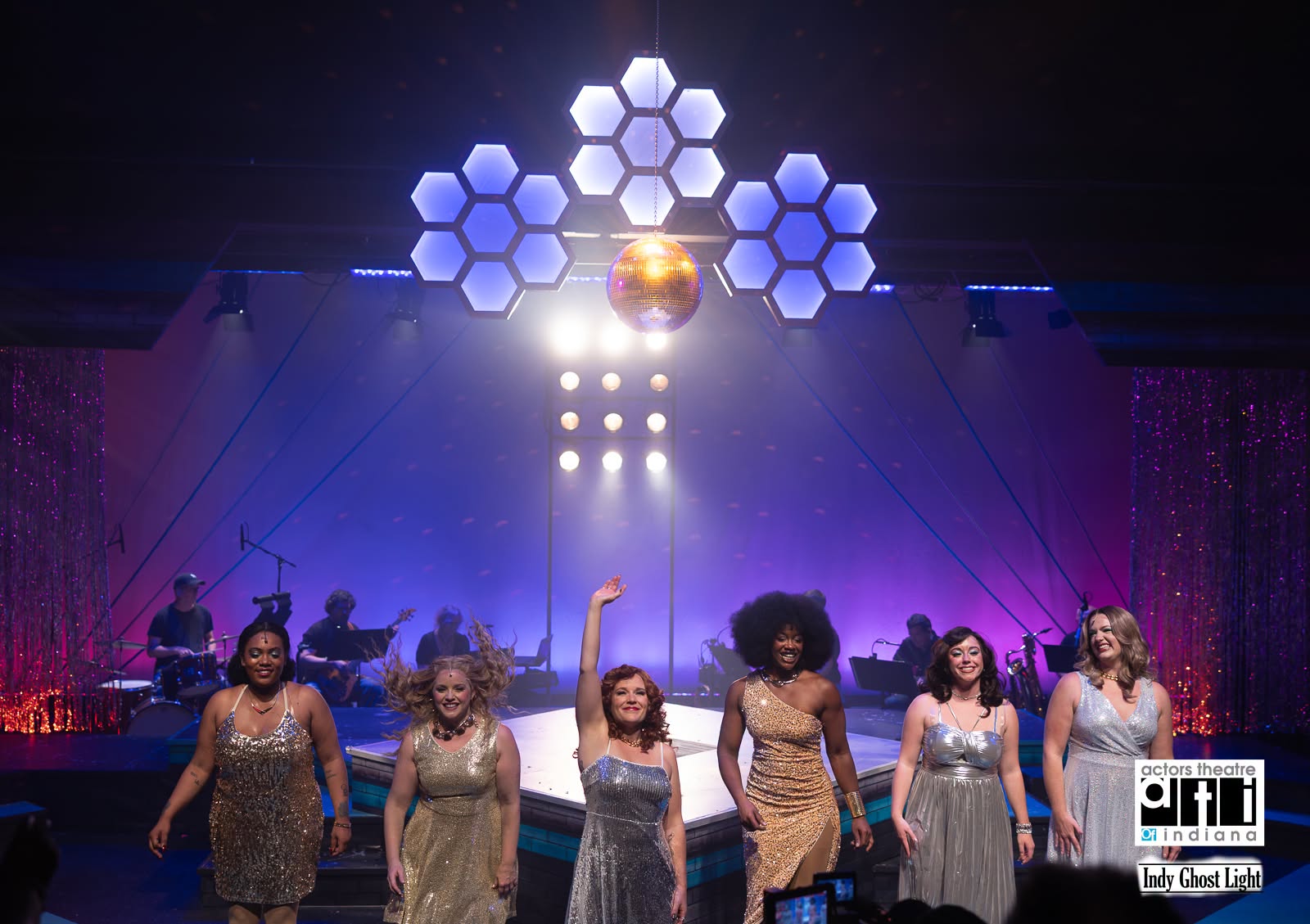
Never Can Say Goodbye: The ’70s Beehive Musical does not try to be a big, complicated story musical, which is part of its charm. Presented by Actors Theatre of Indiana, the production opened Friday at The Studio Theater in Carmel, Indiana, and was directed and choreographed by Carol Worcel, with music direction by Ginger Stoltz.
The musical belongs to the revue tradition that grew out of Beehive, a stage celebration of women’s voices in popular music. Last season ATI presented a hit production of The 60s Beehive Musical This 1970s-focused follow-up expands that idea into a new decade, using familiar songs less as plot points than as cultural snapshots of changing styles, attitudes and freedoms.
The 1970s were not one neat thing, and that is what makes the decade so useful for a show like this. It carried the social upheaval of the 1960s into an era of glitter, grit, liberation, heartbreak and escape. Popular music reflected all of it. Radio could move from soul to arena rock, from disco to country-pop, and from singer-songwriter confession to dance-floor release, sometimes in the same hour. That range is why the songs still connect.


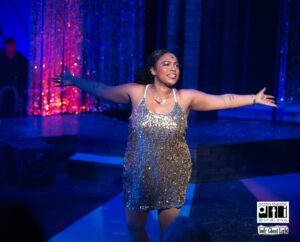 What kept the evening from feeling like another jukebox revue was the talent driving it. The book was light and mostly stayed out of the way, but the vocals, dancing and band gave the show its charge. Worcel’s own Broadway experience seemed to inform both the direction and choreography, keeping the stage in almost constant motion with the confidence of someone who understood how to build a number from the inside. That mattered in a show rooted in a decade when disco and popular dance were part of the culture, not just background decoration. The movement was demanding and nearly nonstop, yet the performers made it look easy, shifting from tight ensemble work to solo moments without showing the strain. Stoltz’s musical direction made the six-piece band sound fully at home in the material. The musicians played with the ease of seasoned pros, sharp enough to make every style change land. Guitarist Bryan Hedrick was extraordinary, adding bite to the rock numbers without overpowering the singers.
The cast was strong from top to bottom. Deborah Mae Hill, Michaela McGarl, Riley Francis, Rachel Dudt, Kira Rangel and Kayla Perry brought a level of vocal command and stage energy that made the ensemble feel unusually even. All but Hill appeared in the ’60s edition of Beehive, and that built-in chemistry showed. No one had to carry the show because everyone could. They attacked the harmonies with sparkle and muscle, passed the spotlight with ease, and turned the revue into something far more vivid than a pleasant trip through old favorites. There was not a weak link among them, though Dudt’s “Barracuda” and Perry and Rangel’s disco work were especially memorable.
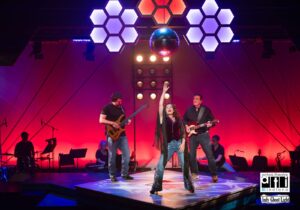 The production values matched that caliber. Duane McDewitt’s scenic design gave the show a clean, lively frame, Dustin Druckman’s lighting kept the stage crisp, and Guy Clark’s costumes suggested the decade without turning it into caricature. Cynthia Collins’ properties design, Drew Bryson’s wig and makeup design, and Zach Rosing’s sound design added to the polish. Together, the work gave the production a level of style and finish that supported the performers rather than competing with them.
With a book by Fred Stuart and the same revue-friendly spirit that made Beehive a crowd-pleaser, the show moved by energy more than plot. The structure stayed loose, which worked. It did not force a heavy story onto songs that already carry their own emotional weight. The spoken sections gave the decade shape and attitude, but the real story was in the voices, the arrangements and the way each number landed.
The set list was the backbone of the evening, reaching across the decade’s major moods instead of staying in one lane. The best stretch came from contrast: pop sweetness against rock bite, disco polish against heartbreak, country warmth against big-voiced resilience. Songs associated with Donna Summer, Diana Ross, Linda Ronstadt, Heart, Blondie, Pat Benatar, Gloria Gaynor, LaBelle, Fleetwood Mac and the Jackson 5 gave the cast room to build. The variety kept the revue from becoming simple nostalgia and showed how much the 1970s packed onto the same radio dial.
For me, the show was also a trip back to my 20s, when much of this music was not nostalgia but the soundtrack of everyday life. That may be the production’s deepest pleasure. It did not simply replay old hits; it made them feel present again. Anyone who wants to revisit that part of their own past, or understand why these songs still hold up, is likely to leave with a tune in their head and a little extra spring in their step.
Never Can Say Goodbye: The ’70s Beehive Musical continues through Sept. 20. For tickets and information, visit thecenterpresents.org.