
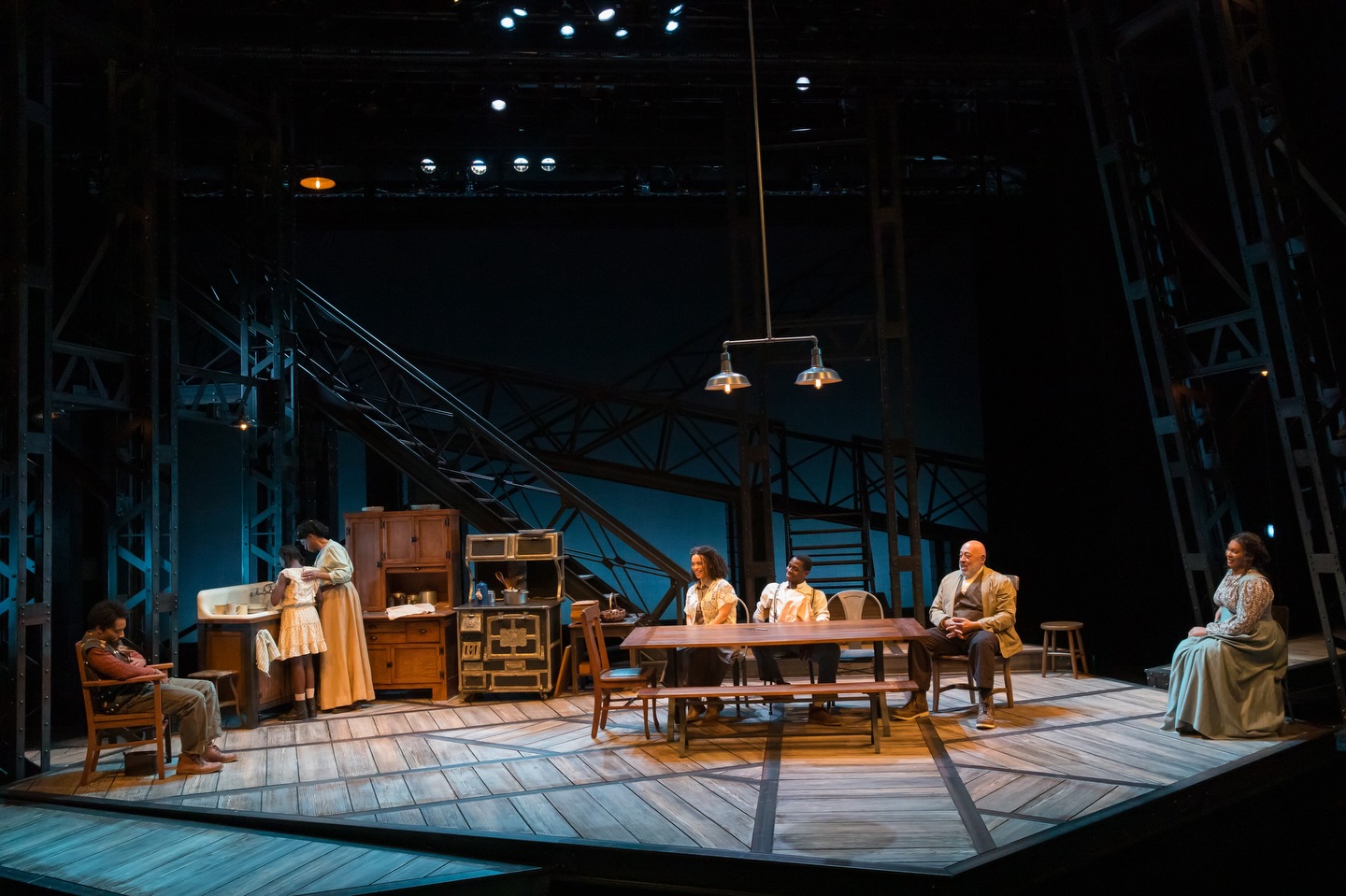
Joe Turner’s Come and Gone – Courtesy of Zach Rosing. Used with permission.
August Wilson’s Joe Turner’s Come and Gone stands as a moving and richly layered contribution to American theater, blending history, cultural identity, and personal discovery. Set in a Pittsburgh boardinghouse in 1911, the play is the second installment of Wilson’s renowned ten-play cycle chronicling African American life throughout the twentieth century. The play premiered on Broadway in 1989. It runs at the Indiana Repertory Theatre until February 22. I saw the powerful drama on Friday.

Joe Turner’s Come and Gone – Courtesy of Zach Rosing. Used with permission.


A boardinghouse managed by Seth and Bertha Holly serves as a microcosm for the wider African American experience. Its transient tenants—each carrying their own burdens and hopes—seek stability and connection in a world that remains unsettled by the legacy of violence and oppression. The arrival of Herald Loomis, a mysterious and despondent man searching for his lost wife, ignites the drama’s core tension. Loomis’s journey is fraught with trauma from his seven-year captivity by Joe Turner, a notorious figure who illegally impressed Black men into labor. His deep pain is palpable, and as the play unfolds, Wilson carefully reveals the layers of Loomis’s suffering and his desperate longing for wholeness. In this work, Wilson not only crafts compelling characters but also delves into the emotional aftermath of slavery, the search for identity, and the intricacies of Black life during the early years of the Great Migration.
Directed with deft skill by Timothy Douglas, a former Yale School of Drama acting student, the superb, seasoned cast includes Keith Randolph Smith (Seth Holly), Stephanie Berry (Bertha Holly) , DeShawn Harold Mitchell (Bynum Walker), Peter Bisgaier (Rutherford Selig), Jacque-John Mary (Jeremy Furlow), Shane Taylor (Harold Loomis), Kerah Lilly Jackson (Zonie Loomis), Kaitlyn Boyer (Mattie Campbell), Christian Makai Lucas (Rueben Mrtcr), Dane Figueroa Didi. Molly Cunningham and Lilian A. Oben (Martha Pentacost).

Joe Turner’s Come and Gone – Courtesy of Zach Rosing. Used with permission.
One of the play’s strengths lies in its colorfully drawn characters, representing different facets of Black life and aspiration. Turning in vivid performances were Taylor as the mysterious, angry, and sullen Loomis, who has travelled from town to town for many years with his daughter, looking for his wife. Smith as the bellowing, no-nonsense, boarding house landlord, Seth and Berry as his kind, long-suffering wife, Bertha.
Wilson’s dialogue is sharp, at times funny, and always deeply human. Wilson avoids caricature, instead offering nuanced portraits that resist easy categorization. Wilson’s writing is both lyrical and grounded, drawing on the rhythms of African American speech while embedding elements of folklore and spiritual mysticism. There was no better illustration of that, spiritually, with its African origins, than a scene during which the boardinghouse inhabitants engage in a call-and-response Juba dance, which is a communal act of spiritual release and a connection to the shared African roots of the household. That particular scene is best described as the production’s showstopper.
The language and symbolism of the play resonated long after the final curtain fell. Wilson’s invocation of African traditions—spirituals, and the power of names—served as a reminder of the enduring strength and resilience of Black culture and was a masterful exploration of identity, history, and healing. The play is essential viewing for anyone interested in the complexities of American life and the enduring quest for self-realization.
For tickets and information about Joe Turner’s Come and Gone Indiana Repertory Theatre visit irtlive.com